


.svg)





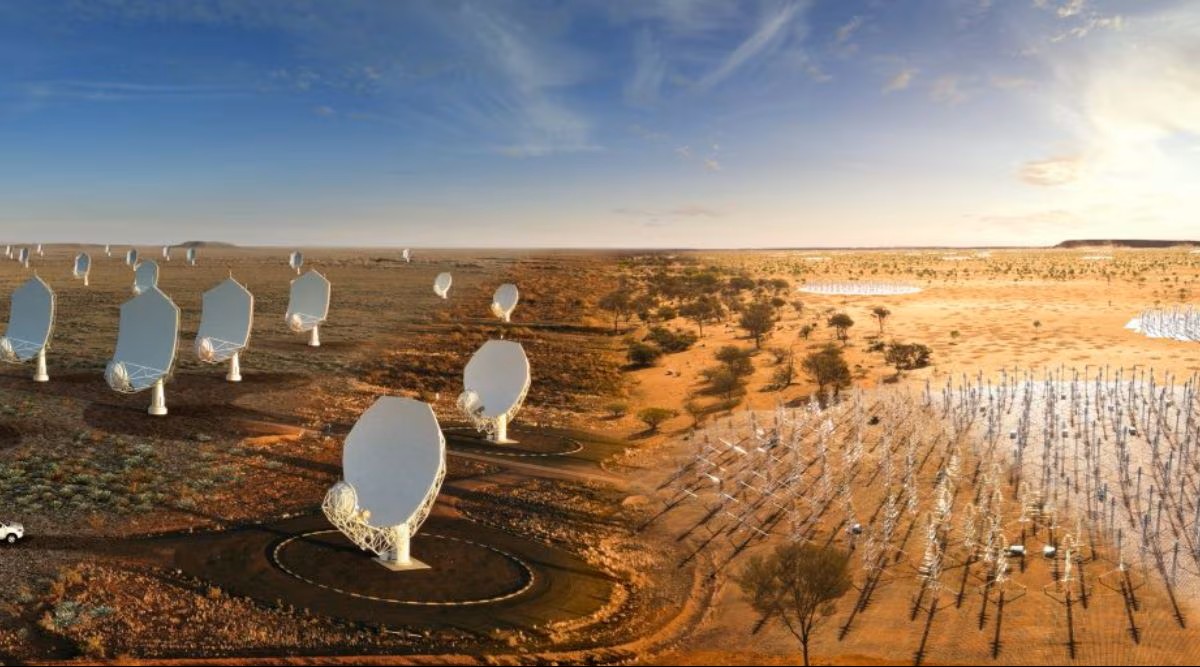
While the SKA-Low array focuses on capturing faint signals from the earliest periods of the universe through thousands of small antennas, the SKA-Mid array will use large dish antennas to investigate topics such as galaxy formation, black holes, and cosmic magnetism. The enormous flow of data generated by the telescopes will be processed by one of the world's most powerful supercomputing infrastructures and made available to the global open science ecosystem.
Distinctive aspects of the project:
The world's largest telescope array: Unmatched scale and sensitivity
Multi-continental structure: Simultaneous observation infrastructure in Australia and Africa
Extreme data capacity: Exabyte-scale daily data production
Potential for scientific breakthroughs: New discoveries related to dark matter, cosmic evolution, and the origins of life
The Square Kilometre Array Observatory is not merely a telescope; it is a global research infrastructure described as the CERN of the 21st century, set to redefine the boundaries of science. Once completed, the project will stand as a foundational scientific center shaping the coming decades in astronomy, physics, data science, and engineering.